Thursday, September 25, 2008

October: Frankenstein by Mary Shelley

Octobers's selection is a Mary Shelley's classic novel Frankenstein. Originally published in 1818, Shelley's work is one of the most influential in literature and has been adapted multiple times for the silver and small screens.


Frankenstein (Enriched Classics)

Frankenstein is a novel infused with some elements of the Gothic novel and the Romantic movement. It was also a warning against the "over-reaching" of modern man and the Industrial Revolution, alluded to in the novel's subtitle, The Modern Prometheus. The story has had an influence across literature and popular culture and spawned a complete genre of horror stories and films. It is arguably considered the first fully realized science fiction novel.

The Obscure References Sci-Fi & Fantasy Discussion group will meet on Wednesday, October 22, 2008 to discuss this novel. Meetings take place at the Linebaugh Library in Murfreesboro, Tennessee starting at 6:30 p.m. in the second floor conference room.

Wednesday, September 24, 2008

Books We've Read (Through the end of 2008)

As we prepare to nominate books for next year, it might be useful to have a list of books we've read in the past. Here is the list of books we've read and discussed so far....

Stranger in a Strange Land by Robert Heinlein
The Forever War by Joe Haldeman
The Hitchhiker's Guide to the Universe by Douglas Adams
Gateway by Frederick Pohl
Ender's Game by Orson Scott Card

Downbelow Station by C.J. Cherryh
A Wrinkle in Time by Madeline L'Engle
The Gate to Women's Country by Sheri Tepper
A Canticle for Leibowitz by William Miller
Dragonflight by Ann McCafferty

The Mote in God's Eye by Jerry Pournelle and Larry Niven
The Moon is a Harsh Mistress by Robert Heinlein
Fahrenheit 451 by Ray Bradbury
Star Man's Son by Andre Norton
The Sparrow by Mary Doria Russell

Wicked by Gregory Maguire
The Snow Queen by Joan D. Vinge
Orphanage by Robert Buettner
The Doomsday Book by Connie Willis
Mission of Gravity by Hal Clement

American Gods by Neil Gaiman
The Hobbit by J.R.R. Tolkein
Farnham’s Freehold by Robert Heinlein
Children of Men by P.D. James
Red Mars by Kim S. Robinson

His Majesty’s Dragon by Naomi Novik
Way Station by Clifford Simak
Dune by Frank Herbert
2001: A Space Odyssey by Arthur C. Clark
Foundation by Isaac Asimov

There will be Dragons by John Ringo
Lucifer’s Hammer by Jerry Pournelle and Larry Niven
Do Androids Dream of Electric Sheep by Philip K. Dick
Starship Troopers by Robert Heinlein
Old Man’s War by John Scalzi

Time Slave by John Norman
Planet of the Apes by Pierre Boulle
Storm Front by Jim Butcher
Warrior’s Apprentice by Lois M. Bujold
To Say Nothing of the Dog by Connie Willis

On the Beach by Nevil Shute
The Truth by Terry Pratchett
Frankenstein by Mary Shelley
Dorsai by Gordon Dickson

Thursday, August 28, 2008

September: The Truth by Terry Pratchett

September's selection takes us to Terry Pratchett's imaginative DiscWorld series with "The Truth." While not the first in this long-runnng series, the story is a stand-alone (well, as much as a Pratchett novel can be) that hopefully will give us a good idea of what Pratchett's writing and universe are like.


The Truth: A Discworld Novel (Mass Market Paperback)


Here's a description from Good Reads....

The Truth, Pratchett's 25th Discworld novel, skewers the newspaper business. When printing comes to Ankh-Morpork, it "drag(s) the city kicking and screaming into the Century of the Fruitbat." Well, actually, out of the Century of the Fruitbat. As the Bursar remarks, if the era's almost over, it's high time they embraced its challenges.

William de Worde, well-meaning younger son of reactionary nobility, has been providing a monthly newsletter to the elite using engraving. Then he is struck (and seriously bruised) by the power of the press. The dwarves responsible convince William to expand his letter and the Ankh-Morpork Times is born. Soon William has a staff, including Sacharissa Cripslock, a genteel young lady with a knack for headline writing, and photographer Otto Chriek. Otto's vampirism causes difficulties: flash pictures cause him to crumble to dust and need reconstitution, and he must battle his desire for blood, particularly Sacharissa's. When Lord Vetinari is accused of attempted murder, the City Watch investigates the peculiar circumstances, but William wants to know what really happened. The odds for his survival drop as his questions multiply.

The Obscure References Sci-Fi & Fantasy Discussion group will meet on Wednesday, September 24, 2008 to discuss this novel. Meetings take place at the Linebaugh Library in Murfreesboro, Tennessee starting at 6:30 p.m. in the second floor conference room.

Wednesday, August 20, 2008

Links for "On the Beach"


Here are a couple of on-line resources for August's novel, "On the Beach."

Friday, August 1, 2008

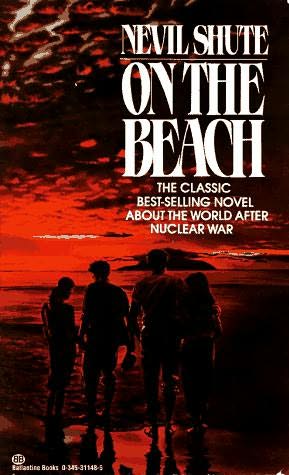
August: On The Beach by Nevil Schute

August's book is the post-apocolyptic story "On The Beach" by Nevil Schute.

On the Beach


The story is set in what was then the near future (1963 in the book) in the months following World War III. The conflict has devastated the northern hemisphere, polluting the atmosphere with nuclear fallout and killing all life. While the nuclear bombs were confined to the northern hemisphere, global air currents are slowly carrying the fallout to the southern hemisphere.

The group will meet on Wednesday, August 27th at 6:30 p.m. to discuss the story. Meetings take place in the upstairs board room of the Linebaugh Library.

Wednesday, July 23, 2008

July: To Say Nothing of the Dog

July's selection is Connie Willis' award-winning, time-travel epic "To Say Nothing of the Dog".


To Say Nothing of the Dog

To Say Nothing of the Dog is a science-fiction fantasy in the guise of an old-fashioned Victorian novel, complete with epigraphs, brief outlines, and a rather ugly boxer in three-quarters profile at the start of each chapter. Or is it a Victorian novel in the guise of a time-traveling tale, or a highly comic romp, or a great, allusive literary game, complete with spry references to Dorothy L. Sayers, Wilkie Collins, and Arthur Conan Doyle? Its title is the subtitle of Jerome K. Jerome's singular, and hilarious, Three Men in a Boat. In one scene the hero, Ned Henry, and his friends come upon Jerome, two men, and the dog Montmorency in--you guessed it--a boat. Jerome will later immortalize Ned's fumbling. (Or, more accurately, Jerome will earlier immortalize Ned's fumbling, because Ned is from the 21st century and Jerome from the 19th.)